Big 4 decks, MIT analysis, Business of Fashion trends reports,but also insider insights and client best practices… In this new report, we haveoutlined the main challenges that will shape augmented creation in 2026.
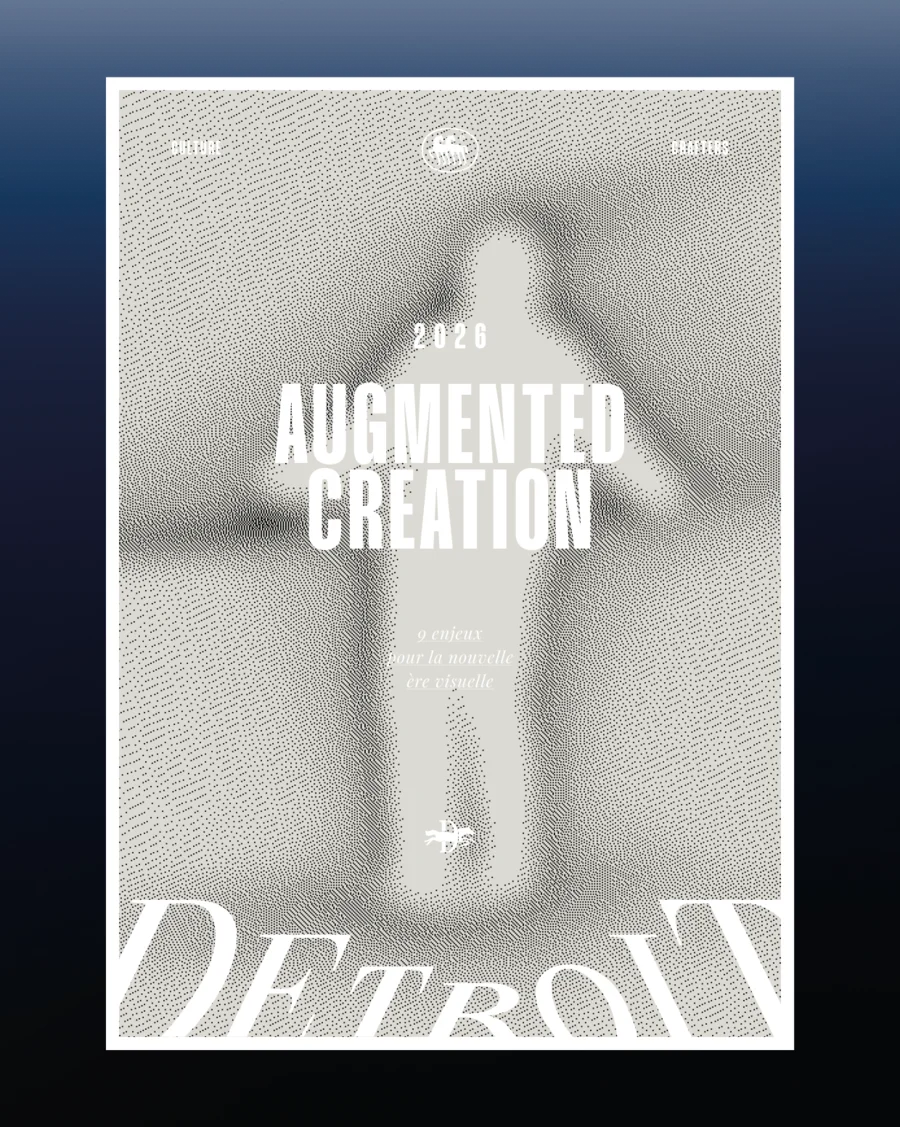
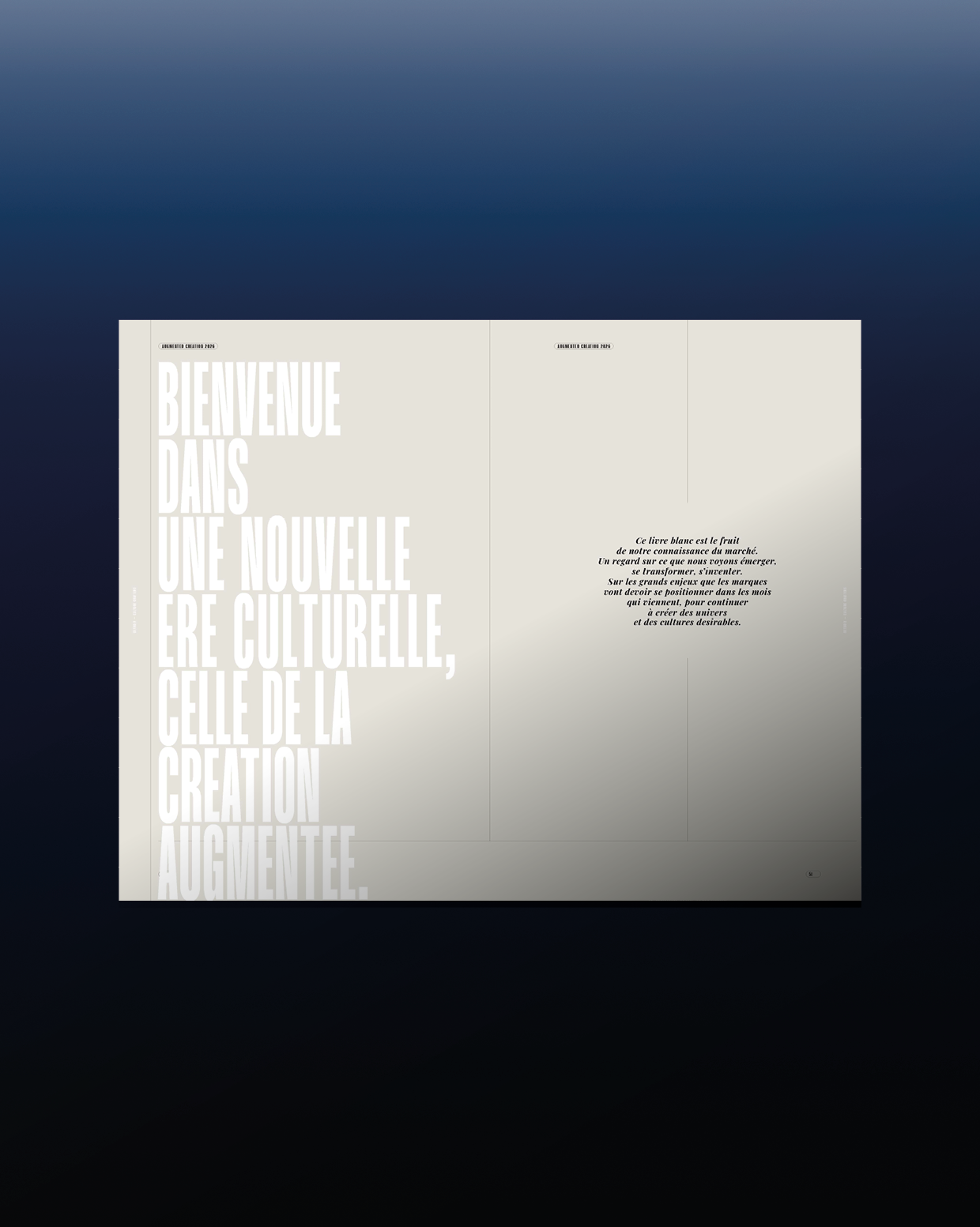
2026 marks a clear rupture.
We are moving beyond the age of scattered experimentation. Artificial intelligence is no longer a creative gadget or a marginal innovation. It is becoming a cultural infrastructure — a new language, a production environment, and a strategic layer for brands, studios, and creative leaders.
Timelines are accelerating. Expectations are rising. Production flows are being restructured.
And a new set of questions now sits at the center of creative strategy:
Augmented Creation 2026 is Detroit’s editorial answer to these questions.
This report is not a catalogue of tools.
It is not a list of prompts, platforms, or shortcuts.
Augmented Creation 2026 offers a strategic and cultural reading of what AI truly changes in the way we:
We explore the shift:
Because creation is no longer a one-off output — it is becoming a system.
The boundaries between creators, studios, agencies, brands, and communities are dissolving.
AI accelerates this movement — and forces brands to rethink their creative sovereignty.
In a world of infinite outputs, value no longer lies in producing more images.
It lies in the ability to:
This is where augmented creation becomes strategic.
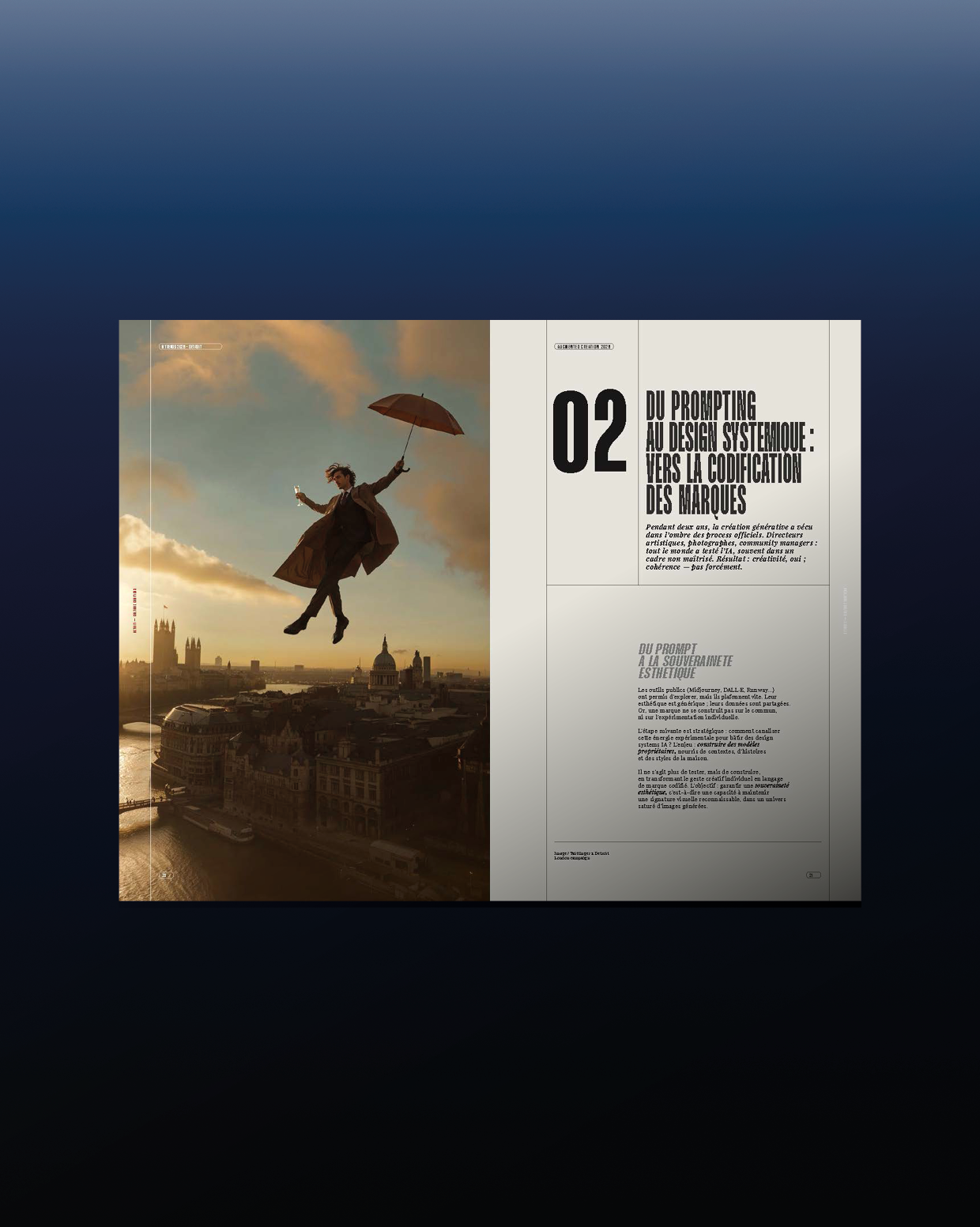
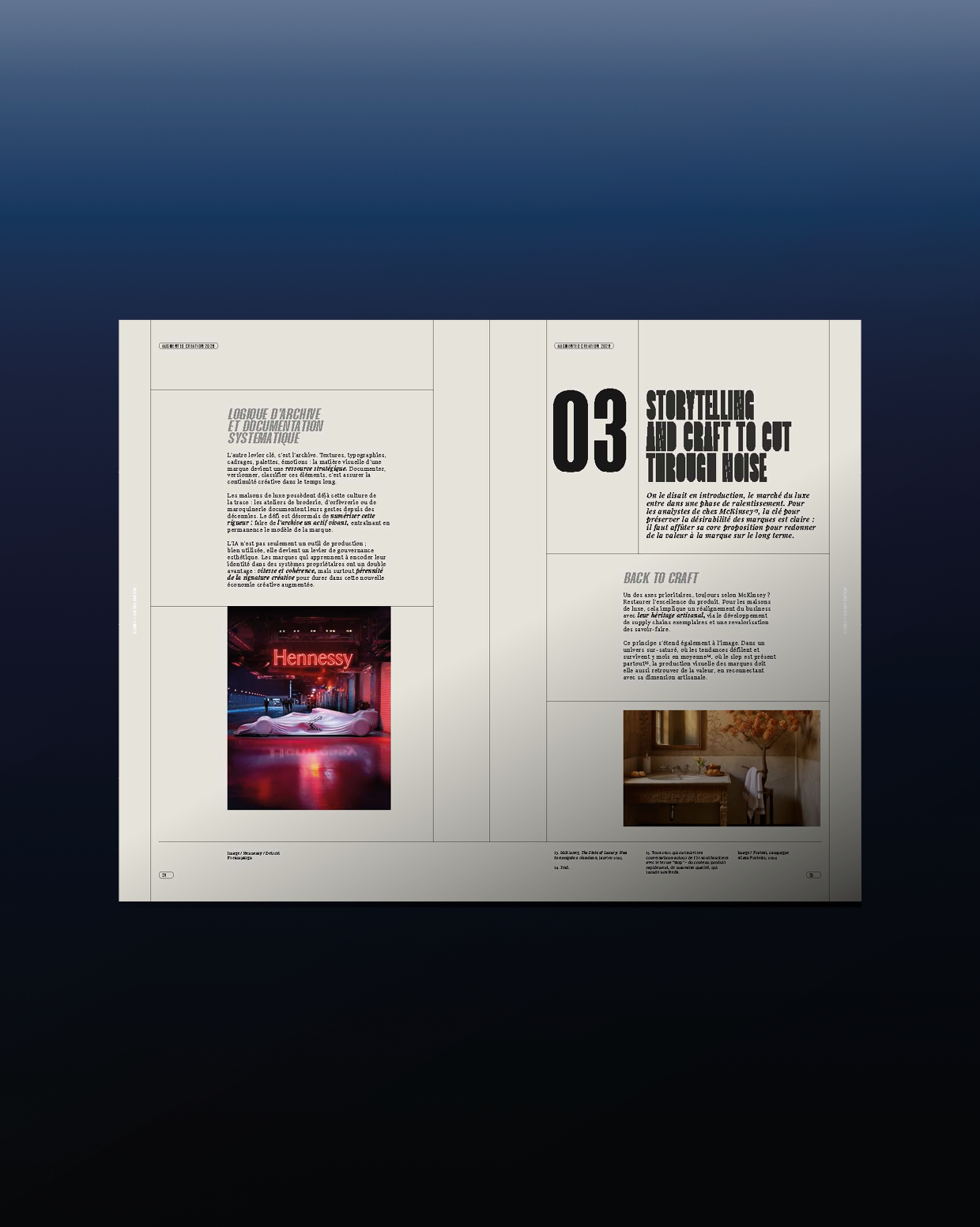
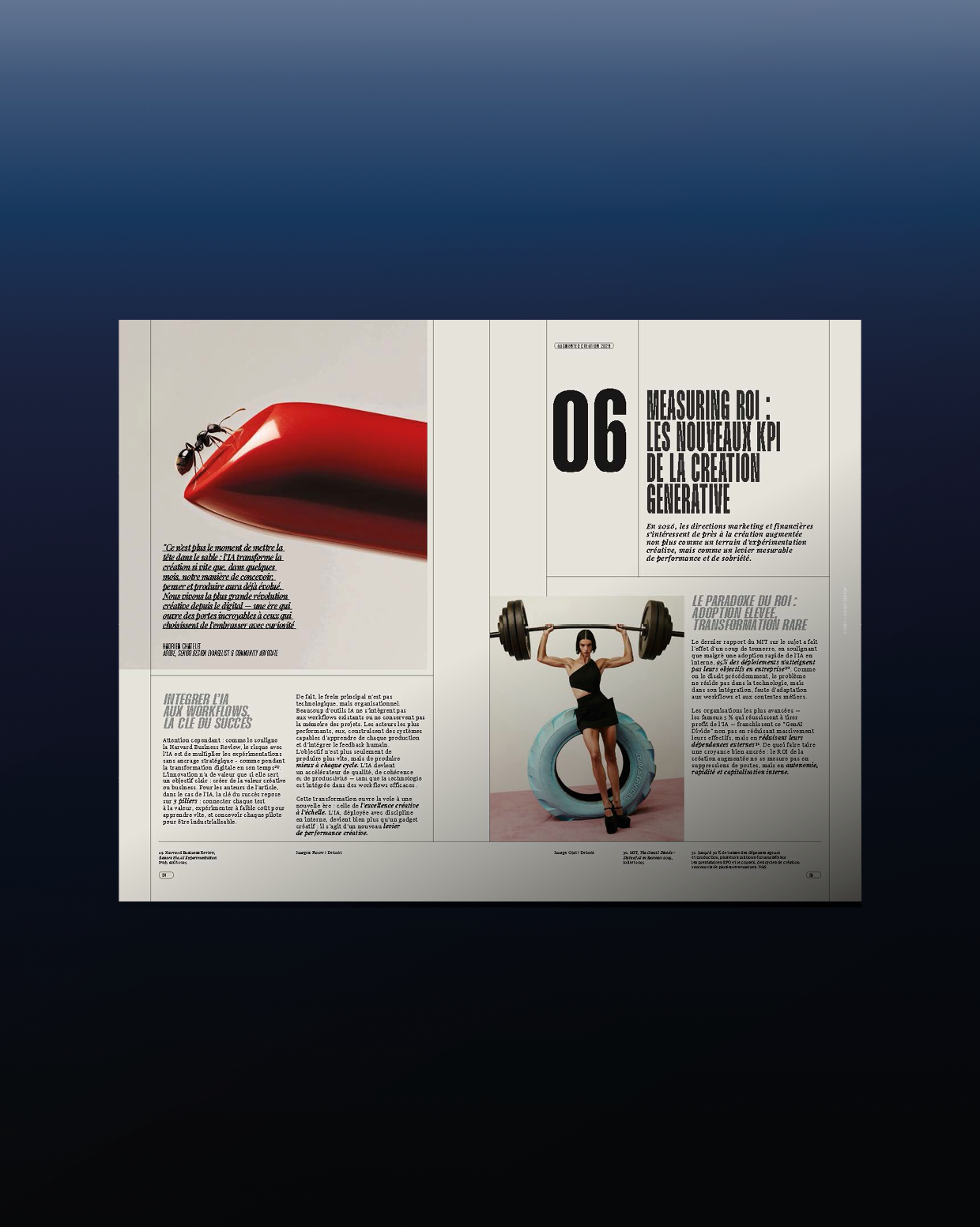
In this report, Detroit identifies nine major trends shaping the next visual era, including:
These trends reflect a single reality:
AI forces brands to move from execution to orchestration.

Augmented Creation 2026 is written for:
In short: for everyone who must now make structural, long-term decisions about their creative future.
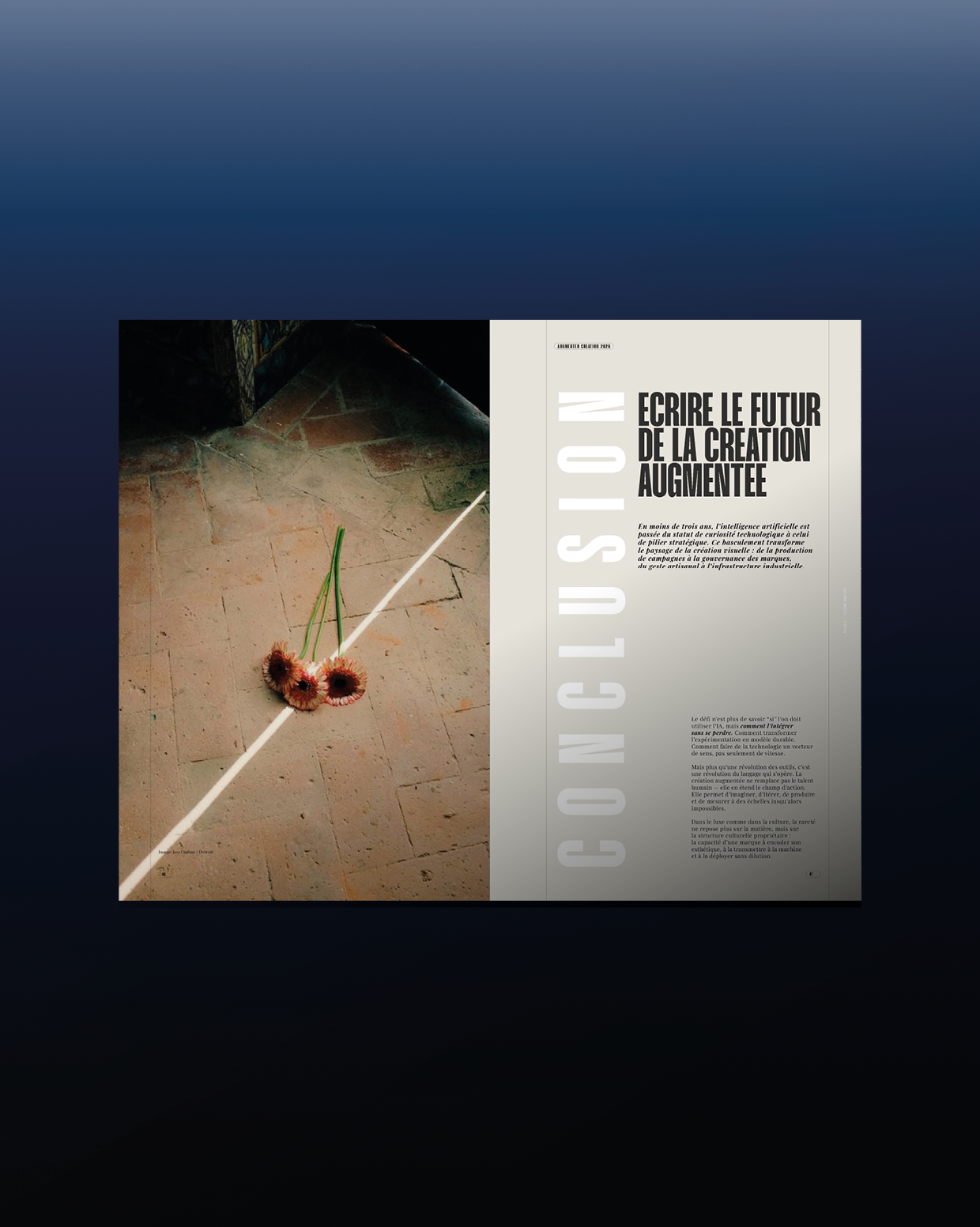
AI adoption is no longer a question of if.
The real challenge is how.
How to move from experimentation to structure.
How to scale without standardizing.
How to automate without losing craft.
How to go faster — without losing meaning.
Augmented creation is not about replacing human sensitivity.
It demands it.
The future of creation will not be algorithmic.
It will be deeply human, systemically structured, and culturally intentional.
The question is no longer what AI can do.
It is what kind of creative culture brands choose to build with it.
Let’s start building it.