In response to the climate emergency, the audiovisual industry must radically rethink its production methods. This white paper, developed by Detroit in collaboration with consulting firm Lysi, analyzes the carbon impact of different visual production models and highlights the transformative potential of generative AI. Based on four comparative production scenarios, the study shows that AI-generated production can reduce carbon emissions by up to 323 times compared to traditional international shoots, while remaining significantly less emissive than studio production. The paper also outlines best practices for responsible and low-carbon AI usage, offering concrete recommendations to help brands move toward more sustainable visual production.

March 10 2025
In response to the climate emergency, the audiovisual industry must rethink its production methods to drastically reduce greenhouse gas emissions.
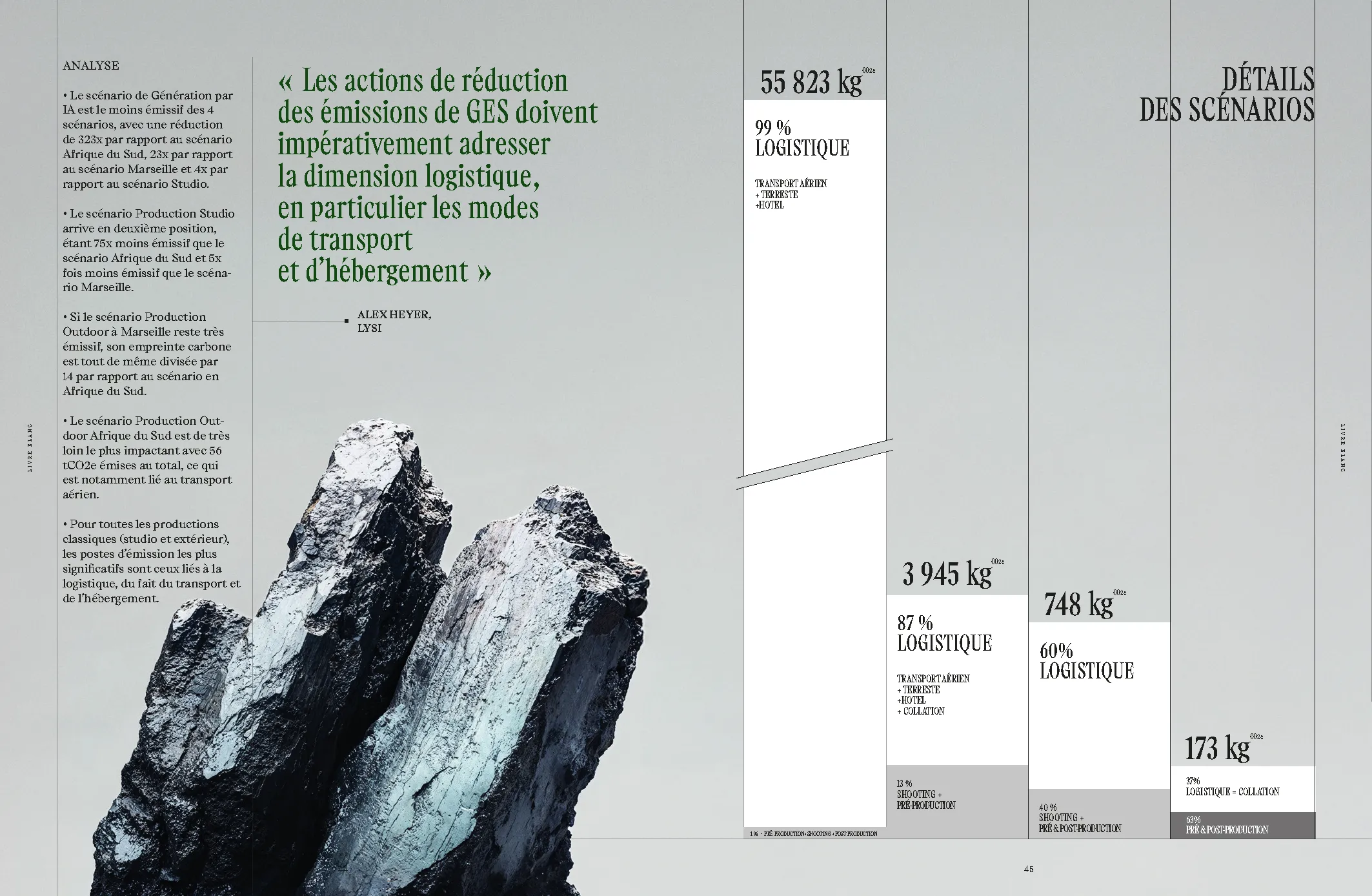
This white paper, developed through a collaboration between Detroit and consulting firm Lysi, analyzes the environmental impact of different production approaches and highlights the exceptional potential of generative AI to address these challenges.
Today, the audiovisual sector generates approximately 17 million tons of CO₂ per year, mainly due to international travel, energy-intensive equipment, and large-scale data storage.
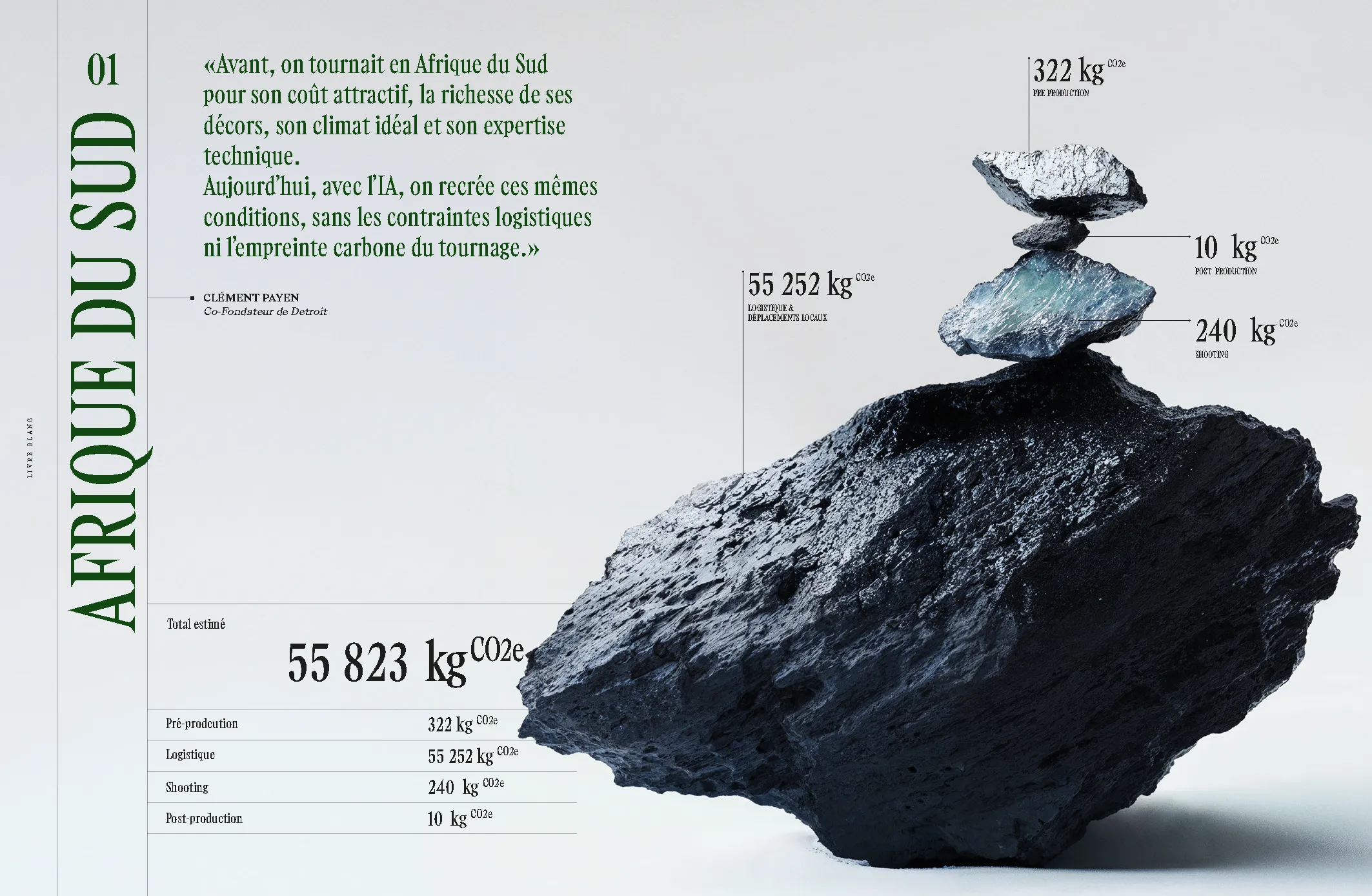
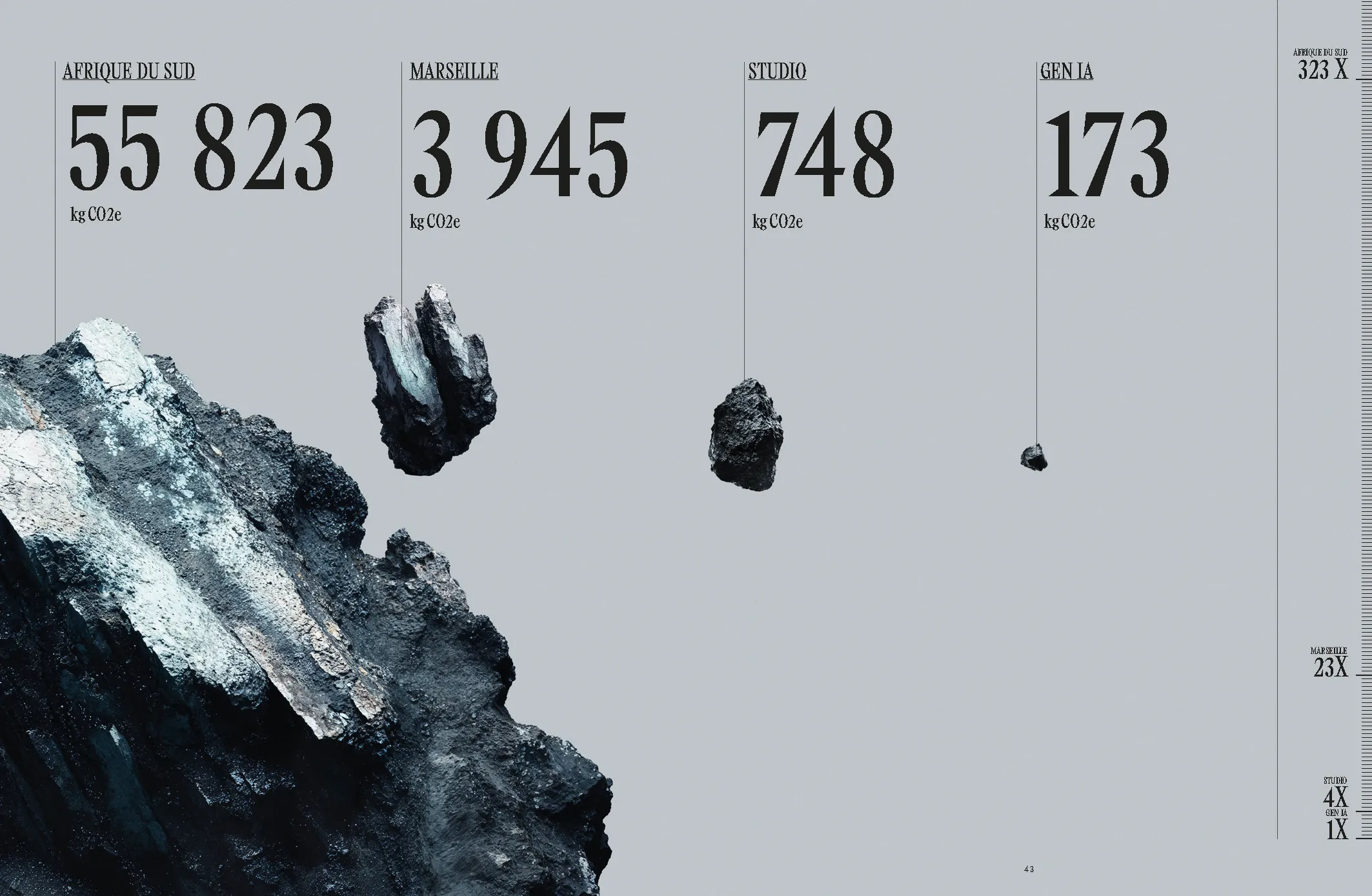
The white paper examines four real-world production scenarios for the same visual campaign:
The results are unequivocal: AI-based production can reduce carbon emissions by up to 323 times compared to a traditional shoot in South Africa. Even when compared to a studio shoot in Paris, AI production remains four times less carbon-intensive.
However, the use of AI must remain thoughtful and controlled. Generative AI models still require significant energy resources, particularly due to the data centers that support them.
For AI to truly become a sustainable solution, it must be integrated into a broader strategy of digital sobriety:
Beyond AI, several best practices can significantly reduce the carbon footprint of visual productions:
Detroit supports brands in moving toward low-carbon visual production through generative AI.
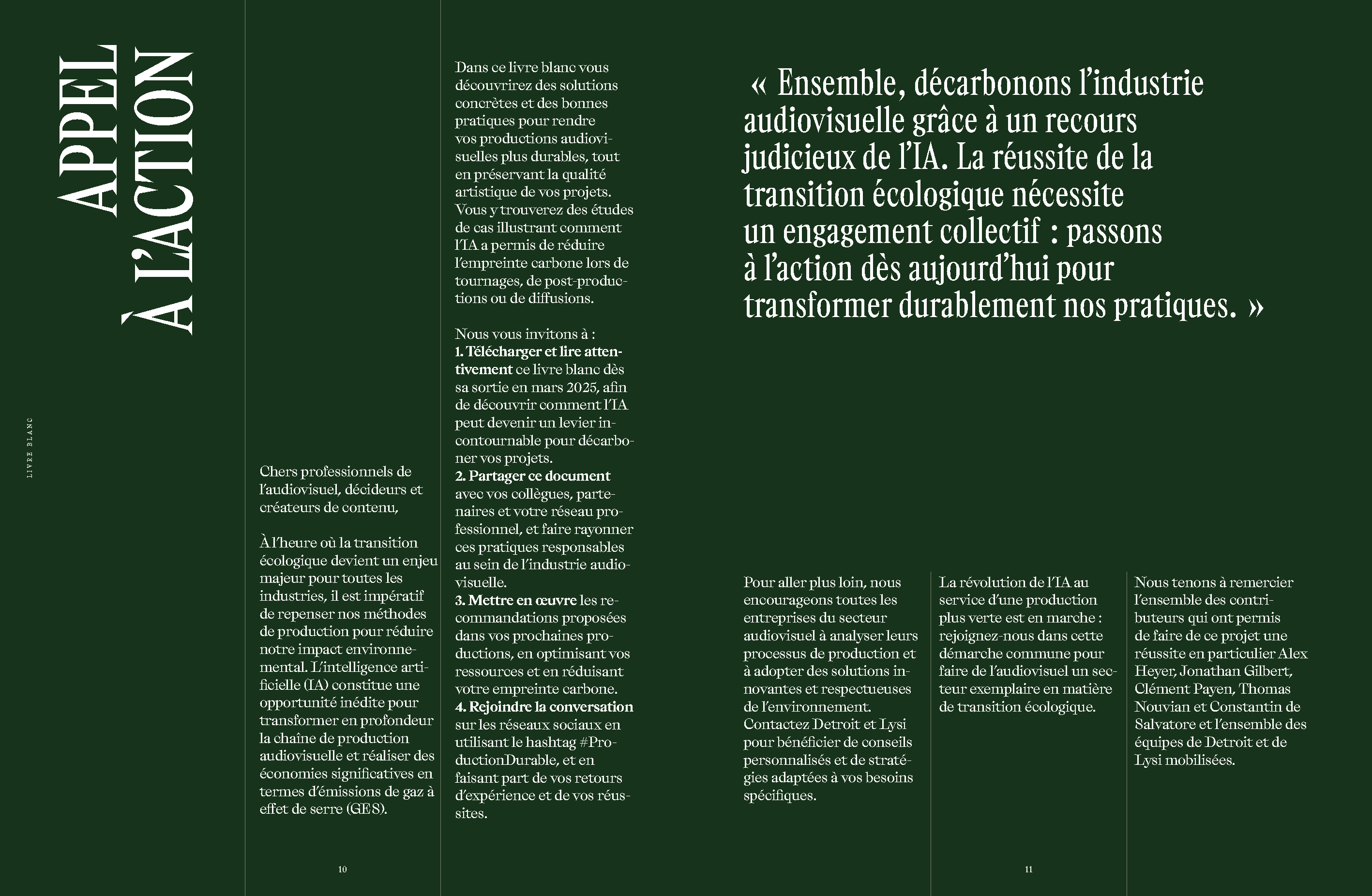
Download our white paper and join us in driving a more sustainable transformation of the audiovisual industry.